Imagine a rally car doing 100 mph down a dirt road. The co-driver shouts: “Forty, left five minus over crest, tightens four plus, triple caution right four, big jump off camber. The driver nods. There are no brakes and only full commitment.
That’s pace notes, but in real life, for you. And it does sound scary. However, this is something that has a deep system. And when you get it, it falls into place.
What Are Pace Notes?
Pace notes are the co-driver’s script. They’re documenting every corner, every jump, every crest, and once-tricky stretches the driver can’t see just yet. The driver flies just ahead of their own line of sight. The notes close that gap. Without them, rally driving at full speed would be one long and terrifying guess. And it can result in one dangerous consequence.
Going through a run called “recce,” teams take notes ahead of race day. On the first pass, the driver calls out the road and the co-driver writes it down in shorthand. During a second pass, the co-driver reads everything aloud. Whenever the driver senses something is wrong, they fix it. It’s like getting directions from someone who already drove that road flat out. Except that person is yelling at you in a harness seat, doing 100 mph.
The Basic System
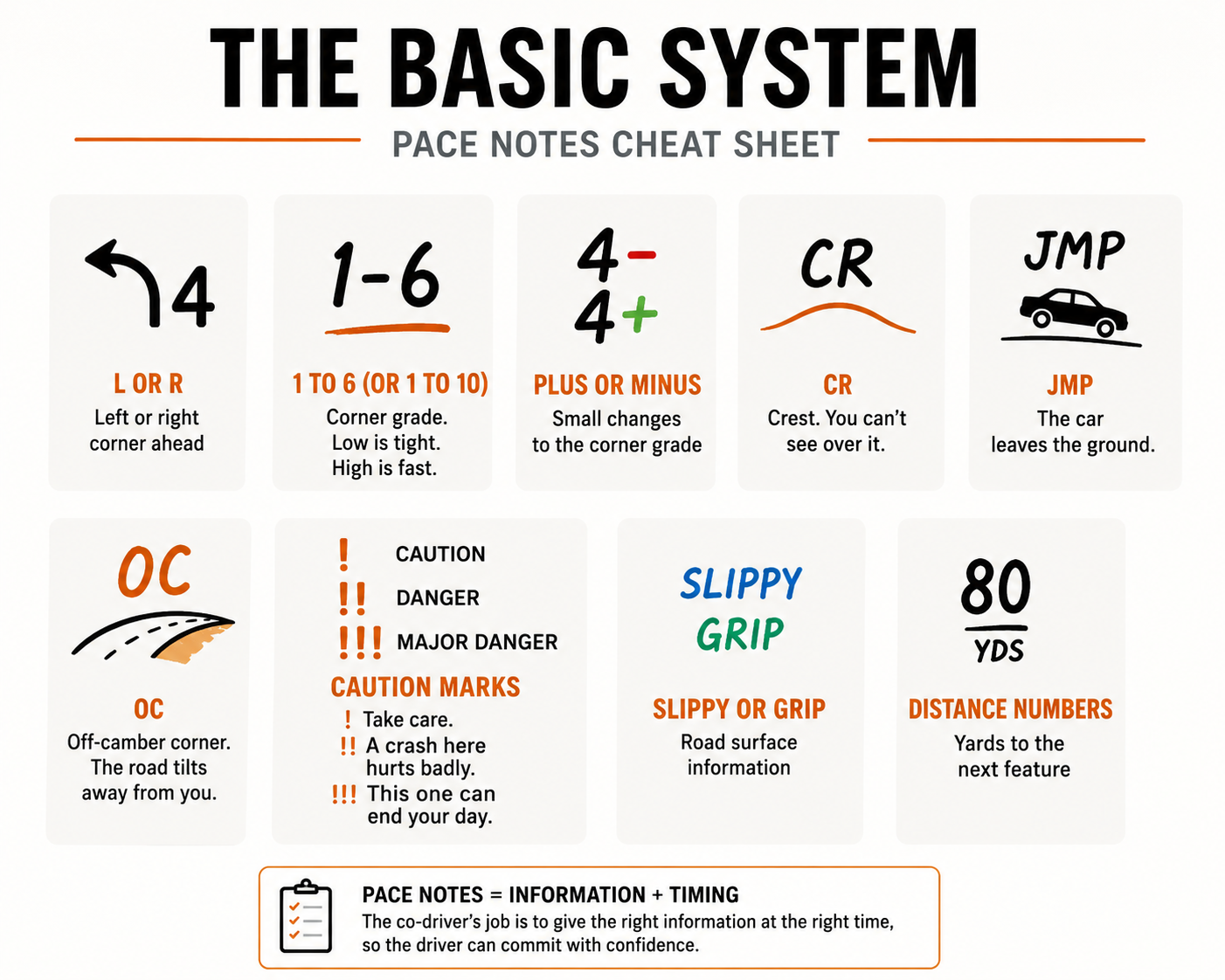
Most teams grade corners using a number scale. Low numbers mean tight turns. High numbers indicate fast, open bends. Here’s a quick breakdown:
- L or R: Left or right corner ahead
- One to six, or one to ten in some systems: Corner grade. Low is tight. High is fast.
- Plus or minus: Small changes to the corner grade
- Cr: Crest. You can’t see over it.
- Jmp: The car leaves the ground.
- OC: Off-camber corner. The road tilts away from you.
- Single caution mark: Take care.
- Double caution mark: A crash here hurts badly.
- Triple caution mark: This one can end your day.
- Slippy or Grip: Road surface info
- Distance numbers: Yards to the next feature
How to Actually Read the Notes
The co-pilot is not reading words from a sheet. The timing is as important as the content. A note too late, or the driver couldn’t react in time. Call it too soon, and they forget it before they get around the corner.
A co-driver may work two or three corners ahead of a pacing car on a fast and open road. They back off and dial it all the way down on a tight, tricky section. It syncs up with the rhythm of the stage. Good co-drivers are also perpetually scanning the road. They dart their eyes between the page and the track, and back again. You should not lose your place in the notes. Much more awful is reading an incorrect note at speed.
How to Stop Over-Driving and Trust the Notes
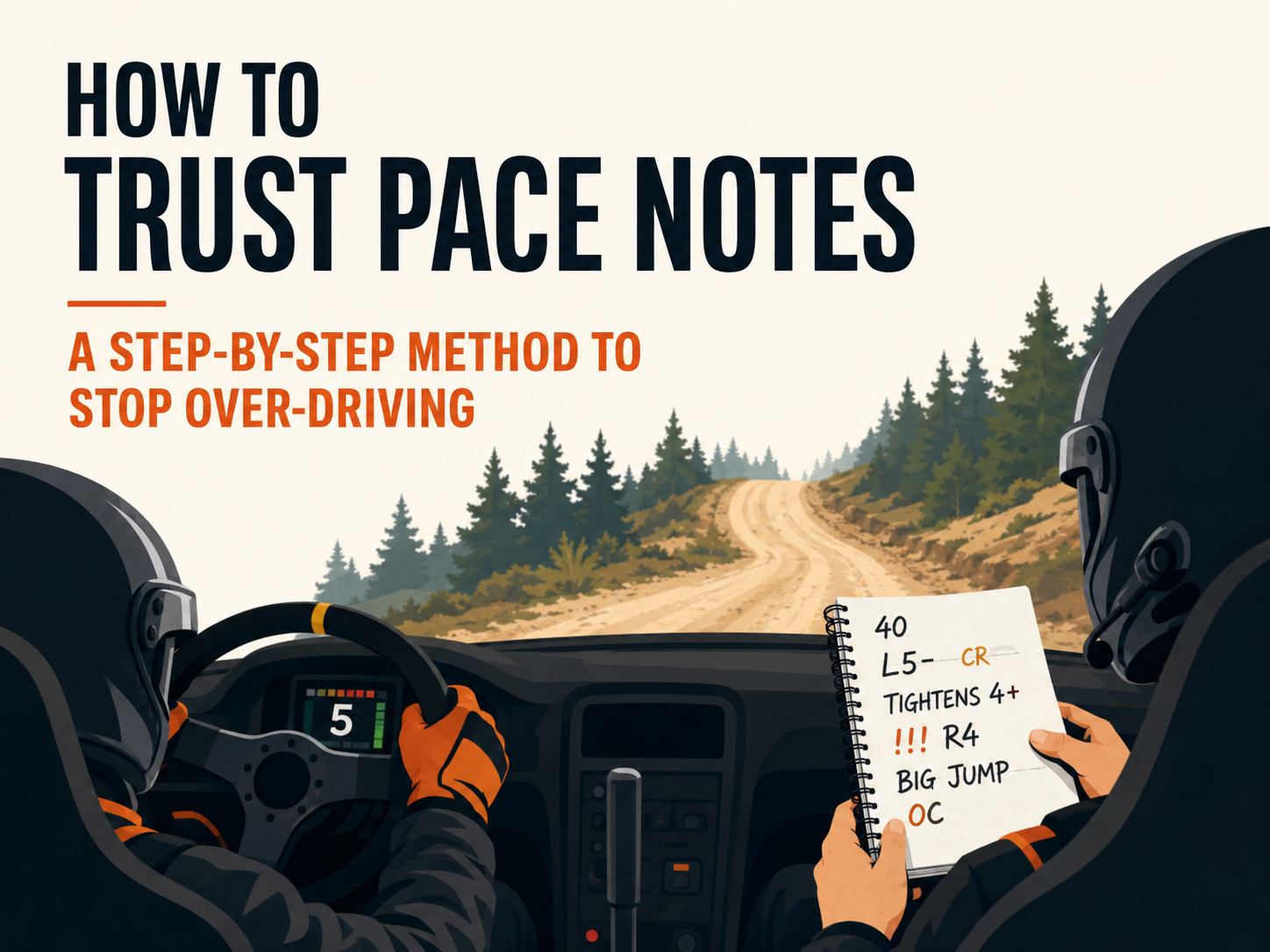
Most new drivers slow before every blind crest. That is a smart move. But it eats into your time badly. Here’s how to build real trust:
- Write clean notes on recce. Take your time on the first pass and get the notes right. Speed comes after.
- Check on the second pass. The co-driver reads every note back. The driver corrects what feels wrong. A second look catches many mistakes.
- Use a trip meter. It tracks the distance between features. The co-driver stays locked on the road. And there is no guessing.
- Commit one corner at a time. Pick one blind crest. Just trust the note and go flat. Then do it again on the next one. Confidence grows corner by corner.
- Talk after every stage. Debrief together and also fix what felt off. Good communication builds trust faster than anything else.
The Trust Factor
Australian rally co-driver Coral Taylor said it well. Pace notes paint a picture of the road ahead. The driver sees what’s coming before they get there. At 200 kph through a forest, that picture is everything.
Trust takes time to build, and it grows corner by corner and also stage by stage. Over-driving comes from doubt. Doubt comes from notes you don’t fully believe in yet. Fix the notes. Trust your co-driver and drive the stage.